

Key Takeaways
- Vertical wall space is often the most underused storage area in small bedrooms.
- Under-bed storage can hold seasonal items, freeing up closet and drawer space significantly.
- Decluttering before organizing prevents wasted effort on items you no longer need.
- Repurposed household containers can replace purchased organizers at zero cost.
- Grouping items by purpose - not by category - makes daily routines faster and easier.
What you will need
Why Small Bedrooms Demand a Different Approach
A small bedroom doesn't automatically become organized just by adding more storage - it becomes organized when you use the right storage in the right places. The most common mistake is buying bins and baskets before deciding what actually belongs in the room. That leads to cramped shelves, underused corners, and a space that looks cluttered even when it's technically tidy.
The strategies here are built around working with what a small bedroom already has: wall height, door backs, under-bed clearance, and closet structure. Most require minimal or no spending. If you're dealing with clutter across multiple rooms at once, it helps to understand the broader principles covered in this comprehensive home organization resource before diving into a single room.
Declutter Before You Organize
Organizing clutter just hides the problem. Before adding any storage system, remove everything from the space and decide what stays. If you need a starting point, the decluttering fundamentals guide walks through the process step by step. Skipping this step means your new system will fill up again quickly.
What you will need
Step-by-Step: Setting Up Your Small Bedroom System
Follow these steps in order. Each one builds on the last, so skipping ahead - particularly past the measuring step - tends to cause rework.
Measuring tape
Measure wall space, closet dimensions, and under-bed clearance before committing to any storage solution.
Stackable bins or flat storage containers
Slide under the bed to hold seasonal clothing, extra linens, or rarely used items out of sight.
Over-the-door organizer
Adds pocket storage to the back of any door without drilling or permanent installation.
Tension rod
Creates a second hanging bar in a closet to double hanging capacity for shorter garments.
Adhesive hooks
Mount on walls or inside closet doors to hold bags, belts, jewelry, or charging cables with no damage.
Empty and assess the room
Remove everything from surfaces, drawers, and the closet. Lay it all out where you can see it - the floor, a bed, or a hallway. This gives you an honest picture of how much you actually own and what the space can realistically hold. Sort items into three groups: keep in this room, relocate elsewhere in the home, and discard or donate.
Measure your available space
Use a measuring tape to record the width and height of empty wall sections, the clearance under your bed frame, and the interior dimensions of your closet. Write these down. Knowing exact measurements prevents you from committing to a layout that doesn't physically fit - a common and frustrating mistake in small rooms.
Maximize vertical wall space
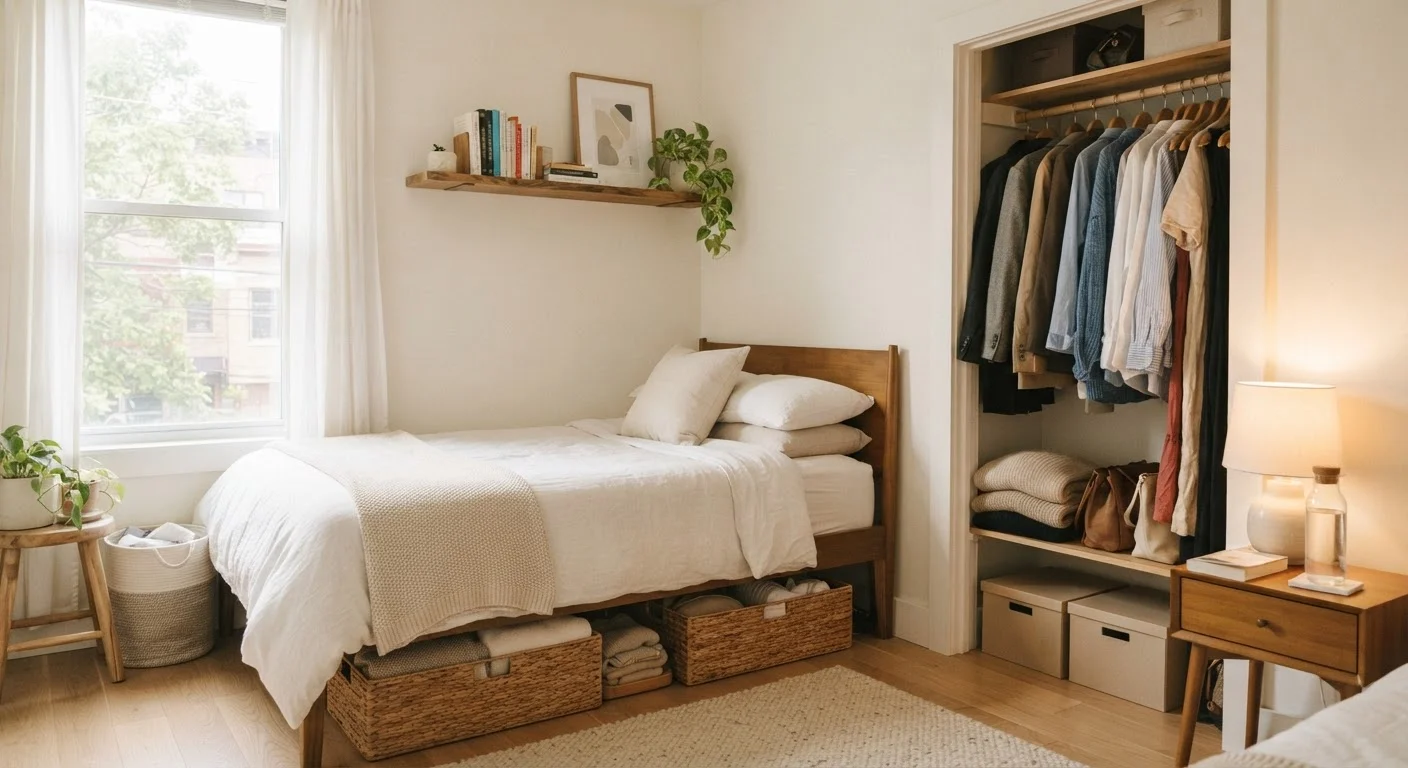
In small bedrooms, floor space is precious - walls are not. Install floating shelves above a desk, nightstand, or dresser to move books, small baskets, or everyday items off horizontal surfaces. Adhesive hooks inside closet walls or on the back of the bedroom door handle bags, scarves, and accessories without taking up any drawer or floor space.
[warning_callout]
Activate under-bed storage
The space under a bed is often wasted. Flat, lidded bins work well for seasonal clothing, extra blankets, or shoes you rotate infrequently. If your bed frame sits too low for containers, bed risers can add several inches of clearance - just verify the weight rating of any risers you use. Label each container so you can locate items without pulling everything out.
Reorganize the closet by how you actually use it
Group clothing and items by how often you reach for them, not by type. Everyday pieces go at eye level and within easy reach; seasonal or rarely used items go high or low. A tension rod added below your main hanging bar doubles capacity for shirts, jackets, or folded pants. Small bins on shelves corrall accessories, socks, and items that otherwise scatter.
Group remaining items into purpose-based zones
Once storage is in place, arrange what stays by how you use it - a reading zone near the nightstand, a getting-dressed zone near the closet, a workspace zone if applicable. This approach, sometimes called zone organizing, reduces daily friction because everything you need for a routine is in one spot. For a broader take on this method, see our guide on zone-based home organization.
Use What You Already Own
Shoeboxes, mason jars, gift boxes, and trays can all serve as effective drawer or shelf dividers. Before buying any organizer, check your kitchen and storage areas first. For more ideas, see our guide on repurposed containers that work as organizers.
If you share the bedroom or home with others, differing habits around tidiness can undermine even a solid system. The guide on organizing shared living spaces offers practical ways to align around a system that works for everyone.