

Key Takeaways
- Zero-based budgeting assigns every dollar of income a job before the month begins, leaving a balance of zero.
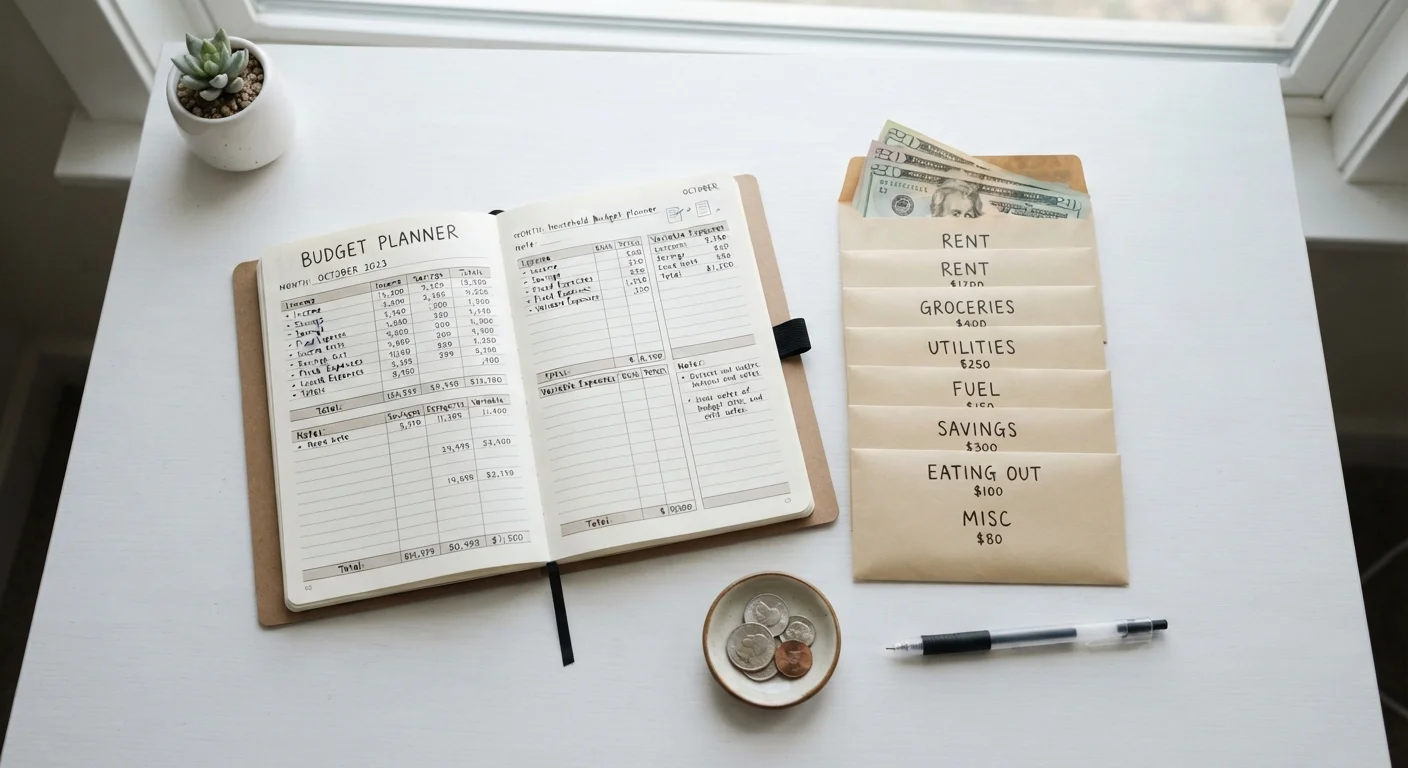
- The envelope method uses physical cash divided into spending categories - when the envelope is empty, spending stops.
- Zero-based budgeting works with any income type; the envelope method is most effective for variable, discretionary spending.
- Both systems require upfront time and honest tracking but differ sharply in format and enforcement mechanism.
- Your lifestyle, payment habits, and self-discipline style should guide which method you choose - or whether to combine them.
Option A
Zero-Based Budgeting
The intentional, every-dollar-accounted-for system.
Best for: People who want a comprehensive monthly spending plan and are comfortable tracking categories digitally or on paper.
Option B
The Envelope Method
The tactile, cash-in-hand accountability system.
Best for: People who overspend in specific categories and want a physical, visual limit that makes it impossible to spend money they don't have.
If you want a complete monthly spending plan covering every expense
Zero-Based Budgeting
Zero-based budgeting accounts for every dollar - fixed bills, savings, debt payments, and discretionary spending - in one unified plan.
If you consistently overspend on groceries, dining, or entertainment
The Envelope Method
Physical cash creates a hard stop that digital systems can't replicate - once the envelope is empty, the spending decision is made for you.
If you prefer digital tools and mostly pay by card or app
Zero-Based Budgeting
Zero-based budgeting integrates well with spreadsheets and budgeting apps, making it practical for people who rarely use cash.
If you're new to budgeting and want immediate, tangible accountability
The Envelope Method
Physically handling cash makes spending feel real and concrete, which research in behavioral economics suggests can reduce impulsive purchases.
If you have irregular income or complex finances with multiple savings goals
Zero-Based Budgeting
Its flexible category structure handles variable income and multiple financial priorities - savings, debt, irregular bills - in a single adaptable plan.
How Each System Actually Works
Both methods share a core philosophy: spend with intention rather than impulse. But they enforce that intention very differently.
Zero-based budgeting starts with your total monthly income and subtracts every planned expense - rent, utilities, groceries, savings, debt payments, subscriptions - until you reach zero. That zero doesn't mean you have no money left; it means every dollar has been assigned a purpose before you spend a cent. The plan lives on paper, a spreadsheet, or a budgeting app. For a deeper look at the mechanics, see how zero-based budgeting assigns every dollar a purpose.
The envelope method is more hands-on. At the start of each pay period, you withdraw cash and physically divide it into labeled envelopes - one for groceries, one for gas, one for dining out, and so on. Spending from each category is limited to what's in that envelope. No borrowing between envelopes (in strict practice), and no overdrafts. When the cash is gone, that category is closed for the period.
The envelope method typically covers only discretionary or variable spending - fixed bills like rent or car payments are still paid digitally. Zero-based budgeting covers everything in one plan. For plain-language definitions of terms like discretionary spending, fixed expenses, and sinking funds, this budgeting vocabulary reference is a useful starting point.
| Criterion | Zero-Based Budgeting | Envelope Method |
|---|---|---|
| Core mechanism | Assign every dollar on paper/digitally | Physically divide cash into envelopes |
| Covers all expenses? | Yes - fixed and variable | Typically variable/discretionary only |
| Works with cards/digital payments? | Yes | No - requires cash withdrawals |
| Enforcement | Self-reported; requires discipline | Automatic - empty envelope stops spending |
| Setup time | Moderate - plan all categories monthly | Low - divide cash at pay period start |
| Best for irregular income? | Yes - adaptable each month | Less ideal; harder to adjust categories |
| Scalability | High - handles complex finances | Low - too many envelopes gets unwieldy |
| Tools needed | Spreadsheet, app, or paper | Cash, envelopes, and a pen |
The Real Differences: Flexibility, Format, and Friction
Choosing between these two systems often comes down to three practical factors: how you pay, how disciplined you are, and how complex your finances are.
~33%
Americans with a detailed monthly budget
Gallup polling has consistently found that fewer than one in three U.S. adults maintain a detailed household budget, highlighting how much room there is for improvement.
18%
Reduction in spending with cash vs. card
Behavioral research has found that consumers tend to spend meaningfully less when using cash compared to cards, supporting the core logic of the envelope method.
Payment format matters more than most people expect. The envelope method only works if you use cash. If your lifestyle is built around debit cards, credit cards, or digital wallets, withdrawing cash each pay period adds real friction - and some bills, like online subscriptions or utilities, can't be paid in cash at all. Zero-based budgeting works regardless of payment method.
The enforcement mechanism is fundamentally different. With envelopes, the limit is physical and automatic - there's literally no money left to spend. Zero-based budgeting relies on self-reporting honesty; you have to actually track each transaction and respect the category limit even though nothing physically stops you from spending more.
Complexity scales differently. A zero-based budget can grow to include dozens of categories, irregular expenses, and multi-goal savings plans. The envelope method works best when kept simple - too many envelopes becomes unwieldy. For readers managing both discretionary cash and digital spending, comparing envelope budgeting with digital spending caps explores how these tools stack up on accountability.
Neither system is objectively better. The one you'll actually stick with is the one that fits your habits, not the one that looks best on paper. You can also explore a broader comparison of tracking tools - from pen-and-paper to apps - in this guide to choosing your budgeting system.
This article provides general financial education and is not personalized financial advice. Consult a qualified financial professional for guidance specific to your situation.