

Key Takeaways
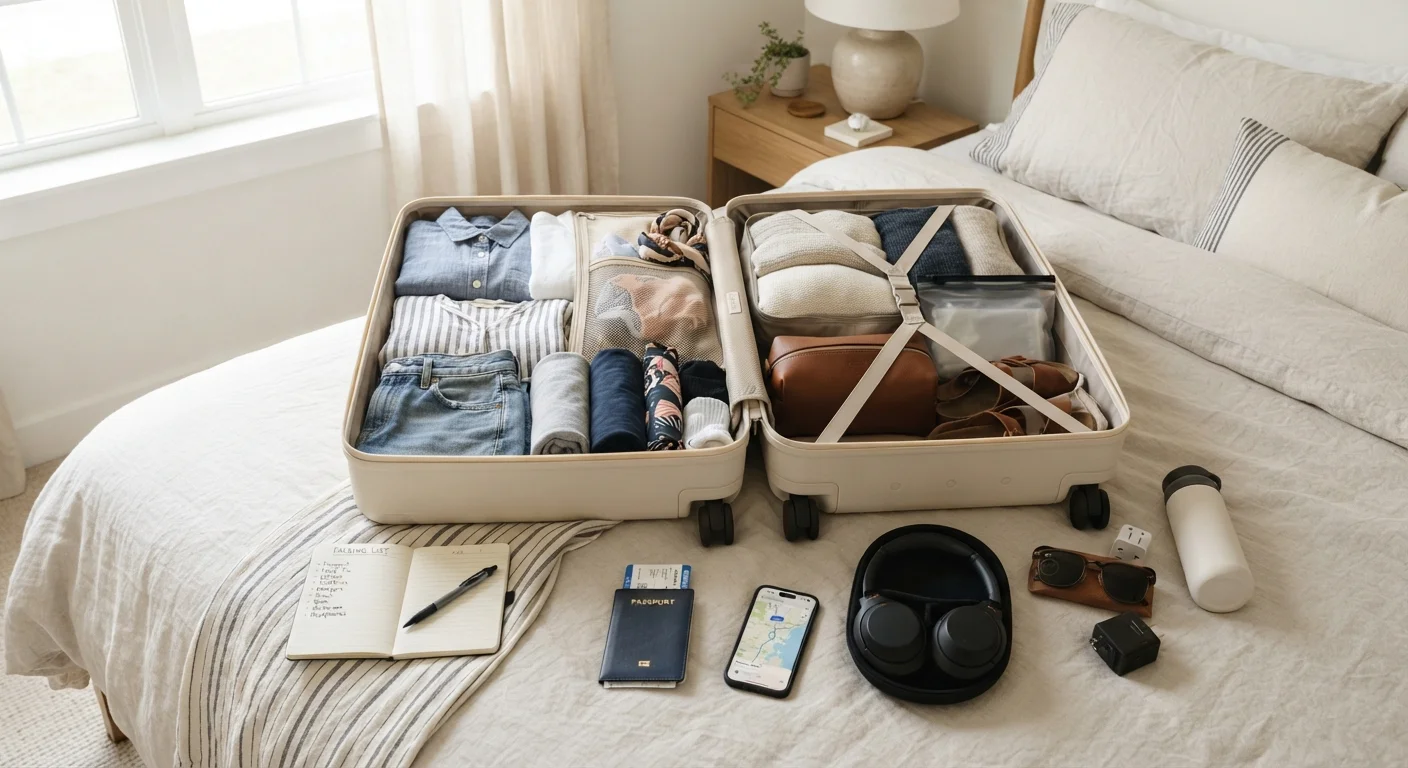
- Start with a written packing list built around your specific itinerary, not a generic checklist.
- Choosing versatile, mix-and-match clothing reduces how much you need to pack overall.
- Overpacking is one of the most common - and most avoidable - travel mistakes.
- A consistent packing system saves time, reduces stress, and protects you from forgetting essentials.
- Carry-on-only travel can lower trip costs by eliminating checked baggage fees.
Why Most Packing Problems Start Before You Zip the Bag
Most packing mistakes aren't made at the last minute - they're made in the planning stage, or the lack of one. Without a clear picture of what each day on your trip actually requires, it's easy to default to "just in case" thinking and end up hauling more than you can comfortably carry.
The fix is simple but requires a few minutes of honest thought: walk through your trip day by day. Where are you going? What activities do you have planned? What's the expected weather? Those answers, not vague categories like "casual clothes," should drive every item on your list. For a broader look at building a well-prepared trip from the ground up, see The American Traveler's Complete Trip Planning Playbook.
Build your list around your actual itinerary, not a generic template.
Generic packing lists are designed for the average trip, which means they're rarely right for your specific trip. Tailoring your list to your actual days eliminates items you'll never use and surfaces things a template might miss.
Choose clothing that mixes and matches in at least three combinations.
Versatile pieces multiply your wardrobe without multiplying your bag weight. Sticking to a consistent color palette means fewer items cover more scenarios.
Pack toiletries and liquids in travel-sized containers from the start.
Full-sized products take up disproportionate space and add weight quickly. Decanting into smaller containers before you leave keeps your bag manageable and helps you comply with carry-on liquid rules.
Do a test pack at least 24 hours before departure.
Packing the day before - rather than the night before or morning of - gives you time to swap items, realize you're missing something, or remove things you impulsively included. Stress-packing leads to overloaded bags.
Lay everything out and then remove one-third before packing.
Most people overestimate how much they'll use and underestimate how much things weigh together. Forcing a reduction before zipping the bag is one of the most effective ways to avoid overpacking.
Core Principles That Apply to Every Type of Trip
Whether you're flying carry-on only or checking a bag, these principles hold up across trip lengths and travel styles. Applying even a few of them consistently will make packing feel less chaotic and your travel noticeably lighter.
One principle that pays dividends beyond convenience is packing light enough to avoid checked luggage entirely. Beyond comfort, it has real financial implications - carry-on-only travel can meaningfully reduce your total trip spend over time, especially on airlines that charge per checked bag.
Building a Packing System You'll Actually Reuse
A packing system isn't complicated - it's a repeatable process that removes decision fatigue and prevents the "did I forget something?" anxiety that trails many travelers to the airport. Start by saving and refining your packing list after every trip. Note what you used, what you didn't touch, and what you wished you'd brought.
Your List Gets Better With Every Trip
After returning from a trip, spend five minutes reviewing what you actually used versus what came back untouched. Remove the unused items from your master list and note anything you wished you'd packed. Over two or three trips, this process produces a highly personalized packing list that's far more useful than any generic version. The goal isn't a perfect list on your first try - it's a list that improves each time.
Seasoned travelers tend to rely on consistent pre-departure routines that go beyond just packing. If you want to sharpen your overall departure habits, see what experienced travelers check before every departure.
Finally, remember that good packing supports the whole trip - including how you eat and spend on the road. Traveling light gives you flexibility, and flexibility often saves money. For ideas on stretching your budget once you've arrived, explore practical approaches to eating affordably while traveling.