

Key Takeaways
- Checked baggage fees on domestic and international flights can add $30-$70 or more per bag, per direction.
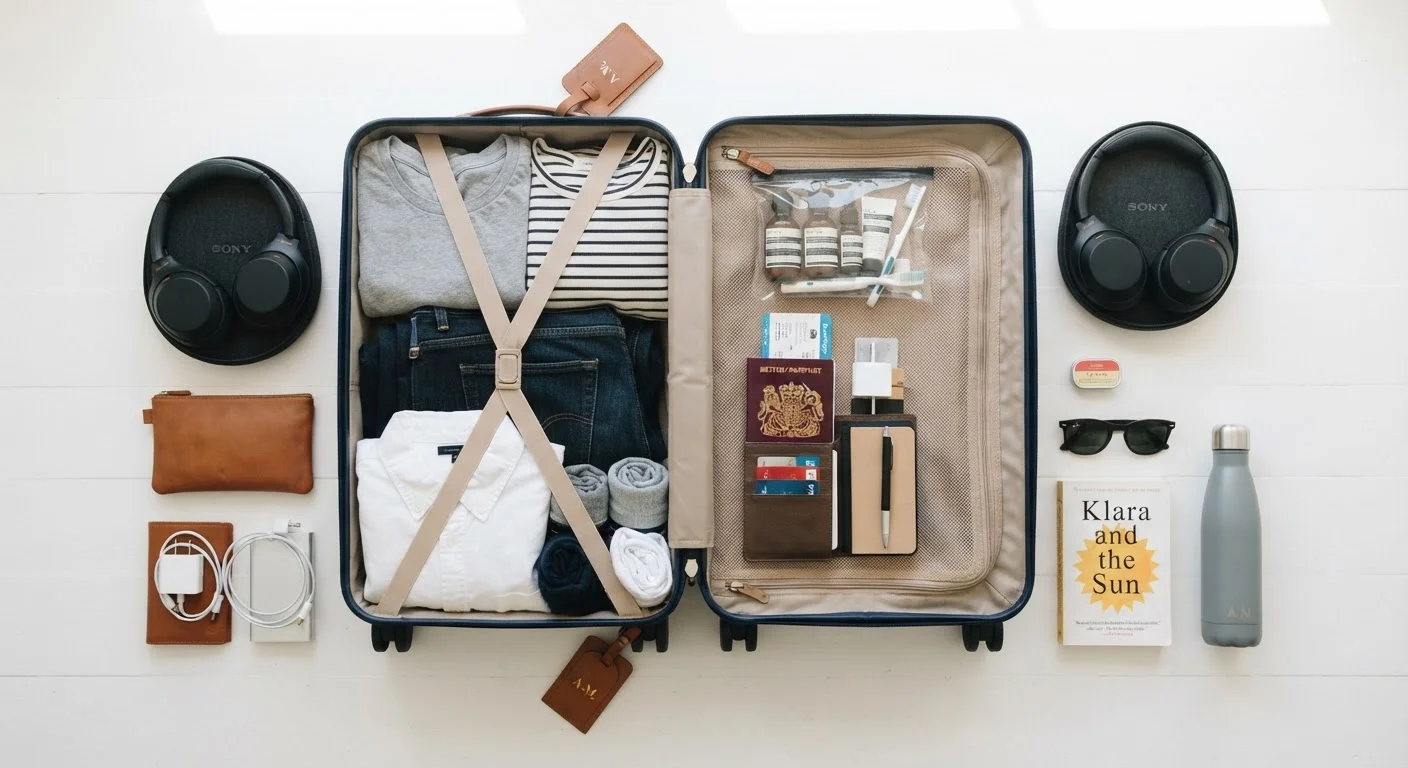
- Carry-on-only travel eliminates checked fees and reduces the risk of lost or delayed luggage.
- The strategy requires intentional packing and works best for shorter or warmer-weather trips.
- Some low-cost carriers charge for carry-on bags too - always verify fare rules before booking.
- Over multiple trips per year, the cumulative savings from skipping checked bags can be substantial.
Eliminates checked baggage fees on most fares
On a round-trip domestic flight, skipping one checked bag can save $60-$80 per person. For a household taking four trips a year, that's potentially several hundred dollars annually.
Speeds up airport arrival and departure
Without bags to check or claim, travelers can arrive closer to departure and exit airports significantly faster - reducing both stress and time lost.
Eliminates risk of lost or delayed luggage
Airlines mishandle millions of bags each year. Keeping everything in the cabin removes this risk entirely and avoids the hassle of filing claims or replacing items.
Increases ground transportation flexibility
Compact luggage fits on buses, metro systems, and shared rides more easily, opening up cheaper transit options that large checked bags make impractical.
Savings compound across multiple trips
The more frequently you travel, the more carry-on savings accumulate - making it especially valuable for travelers who take three or more trips per year.
Requires strict packing discipline
Fitting everything into a carry-on demands deliberate choices about clothing, shoes, and toiletries - a real adjustment for travelers used to packing without constraints.
Difficult for long or cold-weather trips
Heavy coats, boots, and layered cold-weather clothing take up substantial space. A two-week winter trip is genuinely hard to manage with carry-on space alone.
Specialty gear often can't be accommodated
Sporting equipment, formal attire for events, or medical devices may require checked bags or advance shipping regardless of your preference to travel light.
Some low-cost fares charge for carry-ons too
Ultra-low-cost carriers may only include a personal item (such as a small backpack) in the base fare, meaning a full carry-on bag triggers an additional fee.
Overhead bin space isn't guaranteed
On full flights, gate agents may require passengers to check carry-ons at no charge - but this can still cause delays and undercuts the time-saving benefit.
Our Verdict
Carry-on-only travel is a financially sound habit for frequent and budget-conscious travelers who take shorter or moderately long trips. The savings are real and repeatable, though the approach demands careful packing discipline and doesn't suit every itinerary - particularly long cold-weather trips or travel with specialized gear.
Best for US travelers taking multiple trips per year, especially those flying domestic routes or visiting warm destinations where packing light is practical.
Why Baggage Fees Deserve a Place in Your Trip Budget
Most travelers focus on airfare when comparing flight costs, but checked baggage fees are a separate line item that can quietly inflate the total. Major US carriers typically charge $30-$40 for a first checked bag each way on domestic routes, and fees climb higher for international itineraries or additional bags. Round-trip, that's potentially $60-$80 per person for a single bag - before you've even left the airport.
Multiply that across two travelers or several trips a year, and the number becomes meaningful. As hidden costs can quietly break travel budgets, baggage fees are a reliable culprit - especially when travelers don't factor them in at the comparison stage. The carry-on-only approach is a direct response to this problem.
$7.0B+
Annual US airline baggage fee revenue
US airlines collectively reported over $7 billion in baggage fee revenue in recent pre-pandemic years, reflecting how routine these charges have become for travelers.
$60-$80
Typical round-trip checked bag cost (domestic)
At $30-$40 per direction for a first checked bag on major US carriers, a single round-trip can cost a solo traveler $60-$80 in baggage fees alone.
6 in 1,000
Bags mishandled per 1,000 passengers
US Department of Transportation data shows that mishandled baggage, while declining, remains a consistent issue - another practical reason to keep luggage in the cabin.
The Financial Case for Going Carry-On Only
The primary appeal is straightforward: eliminate the fee entirely. If your bag fits in the overhead bin or under the seat, most legacy carriers don't charge extra - though you should always confirm, since basic economy fares on some airlines restrict even standard carry-ons.
Eliminates checked baggage fees on most fares
On a round-trip domestic flight, skipping one checked bag can save $60-$80 per person. For a household taking four trips a year, that's potentially several hundred dollars annually.
Speeds up airport arrival and departure
Without bags to check or claim, travelers can arrive closer to departure and exit airports significantly faster - reducing both stress and time lost.
Eliminates risk of lost or delayed luggage
Airlines mishandle millions of bags each year. Keeping everything in the cabin removes this risk entirely and avoids the hassle of filing claims or replacing items.
Increases ground transportation flexibility
Compact luggage fits on buses, metro systems, and shared rides more easily, opening up cheaper transit options that large checked bags make impractical.
Savings compound across multiple trips
The more frequently you travel, the more carry-on savings accumulate - making it especially valuable for travelers who take three or more trips per year.
Beyond the direct savings, traveling light creates secondary financial benefits. You move faster through airports, which reduces the risk of missing connections and the costs that come with rebooking. You can use cheaper ground transportation like city buses or metro systems without struggling with oversized luggage. And you're more mobile at your destination, which can open up lower-cost accommodation options in neighborhoods further from transit hubs. For a fuller picture of how these savings fit together, see what budget travel actually means.
The Real Limitations You Should Know
Carry-on-only travel isn't a universal solution. It requires genuine packing discipline, and certain trip types make it genuinely difficult.
Requires strict packing discipline
Fitting everything into a carry-on demands deliberate choices about clothing, shoes, and toiletries - a real adjustment for travelers used to packing without constraints.
Difficult for long or cold-weather trips
Heavy coats, boots, and layered cold-weather clothing take up substantial space. A two-week winter trip is genuinely hard to manage with carry-on space alone.
Specialty gear often can't be accommodated
Sporting equipment, formal attire for events, or medical devices may require checked bags or advance shipping regardless of your preference to travel light.
Some low-cost fares charge for carry-ons too
Ultra-low-cost carriers may only include a personal item (such as a small backpack) in the base fare, meaning a full carry-on bag triggers an additional fee.
Overhead bin space isn't guaranteed
On full flights, gate agents may require passengers to check carry-ons at no charge - but this can still cause delays and undercuts the time-saving benefit.
It's also worth noting that the economics shift depending on your fare type. Some ultra-low-cost carriers include a personal item only in their base fare, charging separately for both carry-ons and checked bags. Always read the fare rules - not just the advertised price - before assuming carry-on travel is free. Flight pricing myths cost travelers real money, and baggage fee assumptions are among the most common errors.
Practical Steps to Make It Work
The gap between wanting to travel carry-on only and actually pulling it off comes down to a few repeatable habits.
- Choose a versatile, neutral wardrobe: Items that mix and match reduce total pieces needed significantly.
- Use packing cubes or compression bags: These organize space and can reduce clothing bulk without damaging items.
- Plan to do laundry mid-trip: On trips longer than five days, one laundry stop is usually more cost-effective than checking a second bag.
- Ship ahead if needed: For specialty gear - ski equipment, formal attire - shipping to your destination in advance can cost less than airline oversize fees.
- Know your bag's dimensions: Carry-on size limits vary by airline. Measure your bag against each carrier's published specs before assuming it qualifies.
For more on building a smarter packing system, packing principles that work for any trip type offers a solid foundation regardless of bag size.
Low-Cost Carrier Baggage Rules Vary Widely
Not all carriers treat carry-on bags the same way. Some ultra-low-cost airlines include only a small personal item in their base fare, with full-size carry-ons treated as an add-on purchase. Before assuming your carry-on flies free, review the specific fare class rules on the airline's website. This is especially important when booking through third-party comparison tools, which may not surface baggage policy details clearly.
Combining carry-on discipline with other cost-reduction habits - like eating affordably on the road - can meaningfully extend your travel budget. See how to eat well without draining your daily budget for practical approaches.