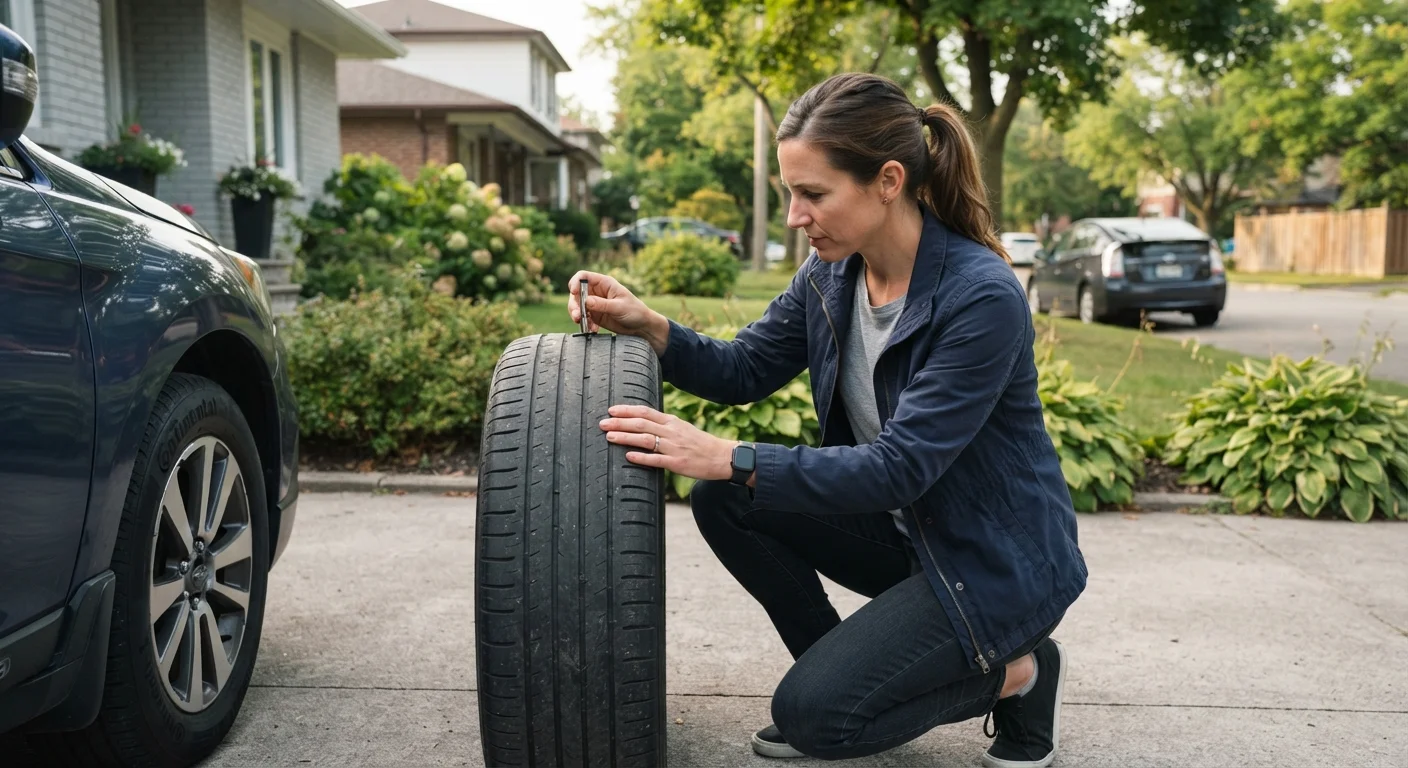
Tyre pressure and tread depth are among the most safety-critical checks before any journey.
Fluid levels - oil, coolant, washer fluid, and brake fluid - should be verified regularly, not just before long trips.
Lights and mirrors take under two minutes to check and are legally required to be functional.
Most pre-journey checks can be completed in under 20 minutes with no specialist tools.
Catching small issues early typically costs far less than roadside repairs or collision damage.
10–20 min
Summary
18 items · 10-20 minutes
Why Pre-Journey Checks Matter
Many drivers associate vehicle inspections with scheduled service appointments - but a qualified mechanic visit every few months can't catch the slow tyre leak or low brake fluid that developed last week. That gap is exactly what a personal pre-journey routine fills.
These checks don't require mechanical expertise. They take minutes, use tools most drivers already own, and address the most common causes of breakdowns and accidents. Think of them as the automotive equivalent of glancing at a weather forecast before you leave the house: low effort, meaningful payoff.
Measures tyre pressure accurately - digital versions are easier to read than dial or stick types.
Required
Tread depth gauge
Gives a precise tread depth reading in 32nds of an inch; inexpensive and widely available.
Optional
Flashlight or work light
Helps you inspect tyres, undercarriage, and engine bay in low-light conditions.
Required
Owner's manual
Contains the correct fluid specifications and tyre pressure values specific to your vehicle.
Your Pre-Journey Checklist
The items below are grouped by the area of the vehicle they cover. Work through them in order and you'll cover the entire car systematically without doubling back.
Tyres
Check tyre pressure on all four tyres using a gauge, including the spare if your vehicle has one. Match the reading to the figure in your owner's manual or door jamb sticker - not the maximum stamped on the tyre sidewall.Must
Inspect tread depth visually or with a tread-depth gauge. The US legal minimum is 2/32 of an inch, but many safety organizations recommend replacing tyres at 4/32 for improved wet-road performance.Must
Look for visible damage - cuts, bulges, embedded objects, or uneven wear - across the entire tyre surface.Must
Lights and Visibility
Test headlights (low and high beam), tail lights, brake lights, and turn signals before setting off. Ask someone to stand outside the vehicle or use a reflective surface to confirm brake lights are working.Must
Check that all mirrors - driver's side, passenger side, and rear-view - are properly adjusted with no obstructions or cracks.Must
Inspect your windshield for cracks or chips that obscure the driver's line of sight. Even small chips can spread under temperature changes.Should
Confirm windshield wipers clear the glass cleanly without streaking or skipping. Replace blades if they leave significant smearing.Should
Fluid Levels
Check engine oil level with the dipstick when the engine is cold. The reading should sit between the minimum and maximum markers.Must
Verify coolant level in the overflow reservoir. If the engine is warm, never open the radiator cap directly.Must
Check brake fluid level in the reservoir under the hood. A notably low level can indicate brake wear or a leak - have it inspected by a mechanic if uncertain.Must
Top off windshield washer fluid. This is the one fluid drivers can safely add without mechanical knowledge, and running dry at highway speed is a genuine hazard.Should
Check power steering fluid if your vehicle uses a hydraulic system. Many newer vehicles use electric power steering and have no reservoir to check.Nice to have
Controls and Safety Equipment
Confirm your fuel level before departing. On longer trips, plan refuelling stops rather than relying on running close to empty.Must
Test the horn briefly to confirm it functions - a working horn is a legal requirement in most US states.Should
Verify that seatbelts in all occupied seating positions latch, retract, and release smoothly.Must
Check that your emergency kit is present and accessible - at minimum: a reflective triangle or flares, a basic first-aid kit, and a phone charger or power bank.Should
Confirm registration, insurance documentation, and your driver's license are in the vehicle.Must
Clear the roof, hood, and rear of the vehicle of any snow, ice, or loose items before driving. Debris or ice dislodged at speed is a hazard to other road users.Must
Don't Check Fluids on a Hot Engine
Opening a radiator cap or checking certain reservoirs on a hot engine can cause burns from pressurized steam or hot fluid. Wait at least 30 minutes after switching off the engine before inspecting coolant levels. Engine oil readings are also more accurate when the engine is cold and oil has settled back into the pan.
Conditions change with the seasons too - seasonal car checks help you adapt this routine for summer heat and winter cold alike.
Brake Concerns Always Need a Professional
If your brake fluid is consistently low, you notice a spongy pedal feel, or you hear grinding or squealing when braking, do not defer the issue. These can signal brake pad wear, fluid leaks, or caliper problems that require immediate attention from a qualified mechanic. Driving on compromised brakes puts you, your passengers, and others on the road at serious risk.
Auto Essentials Editorial Team is the collective byline for our editorial team and contributor network. Articles published under this byline or an editorial pen name are researched, written, and reviewed according to our editorial standards for clarity, consistency, and independence before publication.
Disclaimer: The content provided on our blog site traverses numerous categories, offering readers valuable and practical information. Readers can use the editorial team’s research and data to gain more insights into their topics of interest. However, they are requested not to treat the articles as conclusive. The website team cannot be held responsible for differences in data or inaccuracies found across other platforms. Please also note that the site might also miss out on various schemes and offers available that the readers may find more beneficial than the ones we cover.