

Key Takeaways
- Companion planting can reduce pest pressure and attract beneficial insects without chemicals.
- The science is promising but inconsistent - results depend on soil, climate, and local pest populations.
- Classic combinations like the Three Sisters (corn, beans, squash) are well-documented and practical.
- Some plant pairings actively inhibit each other and are worth avoiding.
- Companion planting works best as one tool within a broader garden strategy, not a standalone solution.
Companion Planting
Companion planting is the practice of growing two or more plant species in close proximity because they benefit - or at least don't harm - each other. The idea is that certain combinations can deter pests, attract pollinators, improve soil nutrients, or simply make better use of garden space. It's one of the oldest gardening strategies and doesn't require any special equipment or spending.
The mechanisms behind companion planting vary: some involve allelopathy (chemical signals released by roots or leaves), others rely on attracting predatory insects, and some work through physical shading or structural support. Research results are mixed and often context-dependent, so treat documented pairings as starting points rather than guaranteed outcomes.
The Basic Logic: Why Plants Influence Each Other
Plants don't grow in isolation in nature - they compete, cooperate, and communicate through chemical signals, root exudates, and the insects they attract or repel. Companion planting tries to harness those dynamics intentionally.
There are four main mechanisms that researchers and experienced gardeners point to:
- Pest confusion or deterrence: Strong-scented plants like basil or marigolds can mask the scent of nearby crops, making it harder for pest insects to locate their target.
- Beneficial insect attraction: Flowers like dill, fennel (kept away from vegetables), and phacelia attract predatory insects - wasps, hoverflies, and lacewings - that feed on common garden pests.
- Nitrogen fixation: Legumes (beans, peas, clover) host bacteria in their root nodules that convert atmospheric nitrogen into a form plants can use, gently enriching the soil for nearby crops.
- Physical support or shading: Tall plants can shelter more fragile neighbors from wind or excessive sun, while sprawling ones suppress weeds between taller crops.
Not every pairing delivers all four benefits - most focus on one or two. Understanding which mechanism you're targeting helps you choose combinations that make sense for your specific problem.
Results Vary by Garden Conditions
Companion planting outcomes depend heavily on your local climate, soil type, and which pest species are actually present in your area. A pairing that performs well in a humid coastal garden may show little effect in a drier inland setting. Use general guidelines as a starting framework and adjust based on what you observe season to season.
What the Science Actually Says
Companion planting is one of the more contested areas in horticultural research. Studies confirm that some pairings produce measurable benefits - but results are inconsistent across different climates, soil types, and pest populations. A pairing that reduces aphid load in one region may show no effect fifty miles away.
That said, several combinations have meaningful evidence behind them. Intercropping brassicas with clover has been shown in multiple studies to reduce aphid colonization. Marigolds (Tagetes species) have demonstrated nematode-suppressing properties when grown as a cover crop prior to planting susceptible vegetables. Basil planted near tomatoes shows modest evidence for repelling thrips.
~30%
Aphid reduction in brassica/clover trials
Multiple intercropping studies have documented meaningful reductions in aphid colonization when clover is grown between brassica rows.
3,000+ years
Documented history of the Three Sisters system
The corn-bean-squash polyculture has been practiced by Indigenous communities in North America for thousands of years and remains one of the most studied companion planting systems.
The honest takeaway: companion planting is not a substitute for good soil care, watering practice, or pest monitoring. It works best as one layer in a broader strategy. If you're starting a new vegetable plot, see our beginner's guide to vegetable gardening for the foundational steps that make everything else more effective.
Proven Pairings Worth Trying
Rather than memorizing a long list, focus on a handful of combinations with solid track records:
- The Three Sisters
- Corn, beans, and squash grown together - a centuries-old Indigenous American practice. Corn provides a climbing structure for beans, beans fix nitrogen, and squash leaves shade the soil to suppress weeds and retain moisture. It's one of the most well-documented examples of productive polyculture.
- Tomatoes + Marigolds
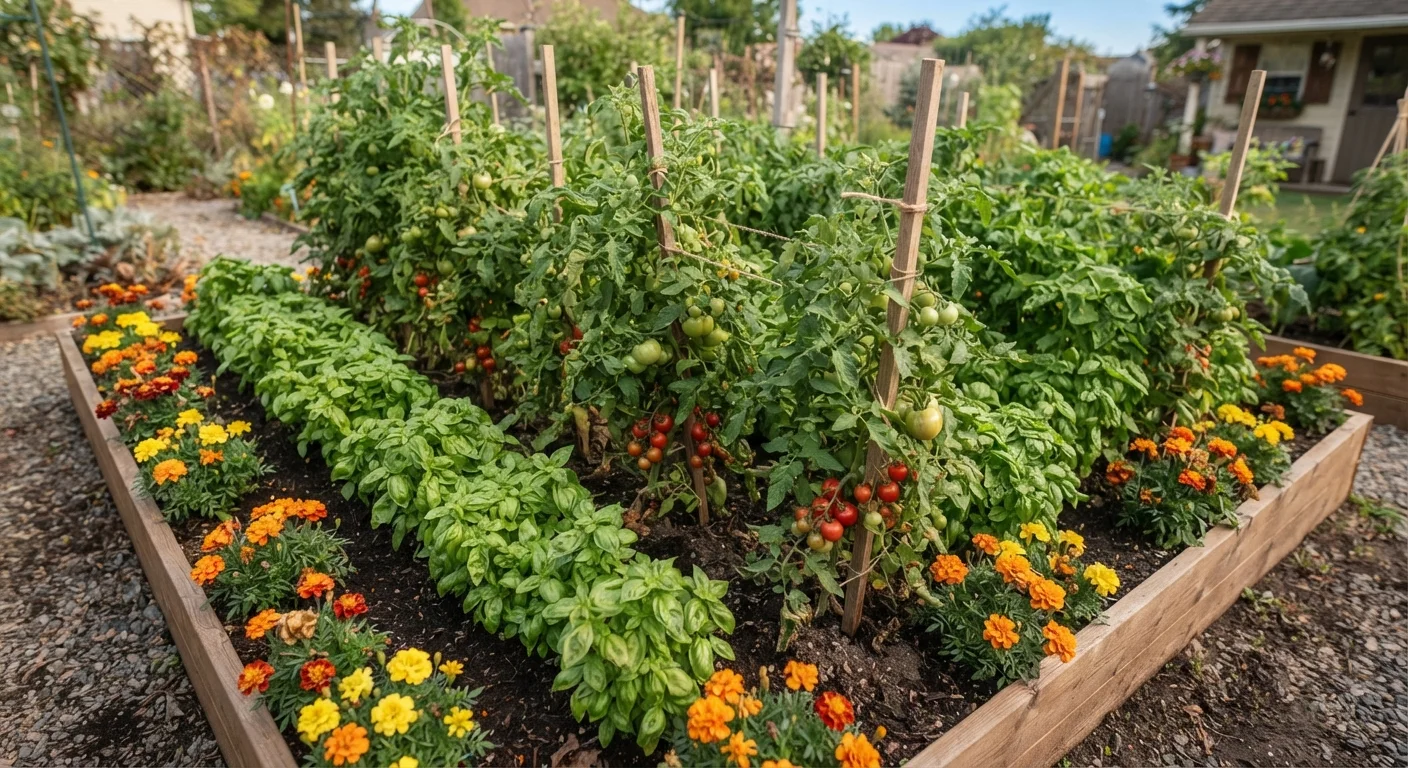
- French marigolds (Tagetes patula) planted as a border or interplanted with tomatoes deter whitefly and certain nematodes. They also attract pollinators and are easy to grow from seed.
- Brassicas + Nasturtiums
- Nasturtiums act as trap crops - aphids often prefer them over cabbage or kale, drawing pests away from your main crop. They're edible, low-cost, and self-seed freely.
- Carrots + Onions
- The theory is that carrot fly and onion fly are each deterred by the scent of the other crop. Evidence is limited but the pairing is broadly recommended and carries no known downsides.
For a deeper look at what's eating your plants, our garden pest identification guide can help you match the right companion strategy to the specific problem.
Start With One or Two Pairings
Don't overhaul your entire garden layout at once. Pick one well-documented pairing - marigolds with tomatoes, or nasturtiums near brassicas - and observe the results over a full season. Keeping notes on what you planted, where, and what pest pressure looked like gives you real data to build on next year.
Combinations to Avoid
Just as some plants cooperate, others actively suppress each other. A few pairings that consistently cause problems:
- Fennel near almost anything: Fennel releases allelopathic compounds that inhibit germination and growth in many vegetables. Grow it in a container or its own isolated bed.
- Onions/garlic near beans and peas: Alliums can stunt legume growth and reduce yields.
- Brassicas near strawberries: Competitive for nutrients and known to inhibit strawberry development.
- Dill near carrots (when flowering): Young dill benefits carrots, but once dill flowers it can cross-pollinate with carrots and weaken both.
If you're working with limited space, strategic planting that avoids these conflicts can be as valuable as adding beneficial companions. Pairing your companion planting approach with good soil practice pays dividends too - for ideas on low-spend garden improvements, see low-cost ways to improve your garden.