

Key Takeaways
- Soil structure, biology, and chemistry all interact - improving one often improves the others.
- A simple squeeze test or at-home pH kit can reveal a lot about your soil without expensive lab work.
- Adding organic matter is the single most cost-effective way to improve almost any type of soil.
- Most common plant problems - yellowing leaves, poor growth, disease - trace back to soil issues.
- Healthy soil reduces your long-term watering and fertilizing costs significantly.
Soil Health
Soil health refers to the ongoing capacity of soil to function as a living ecosystem - supporting plant growth, filtering water, cycling nutrients, and hosting billions of microorganisms. Healthy soil isn't just dirt; it's a complex, active environment that determines how well plants feed, anchor, and defend themselves. When soil health is strong, gardens require less fertilizer, less water, and less intervention overall.
Soil scientists often measure health through indicators like organic matter percentage, microbial biomass, aggregate stability, and cation exchange capacity (CEC) - a measure of how well soil holds onto nutrients before they leach away.
The Three Pillars of Soil: Structure, Biology, and Chemistry
Soil works through three interconnected systems, and understanding them helps you target the right fix rather than guessing.
Structure is how soil particles clump together into aggregates. Good structure creates pore spaces that hold air and water - two things roots need in balance. Sandy soils drain too fast and hold few nutrients; clay soils compact and waterlog easily. Loamy soil, a balanced mix of sand, silt, and clay, is the gardener's goal because it holds moisture without drowning roots.
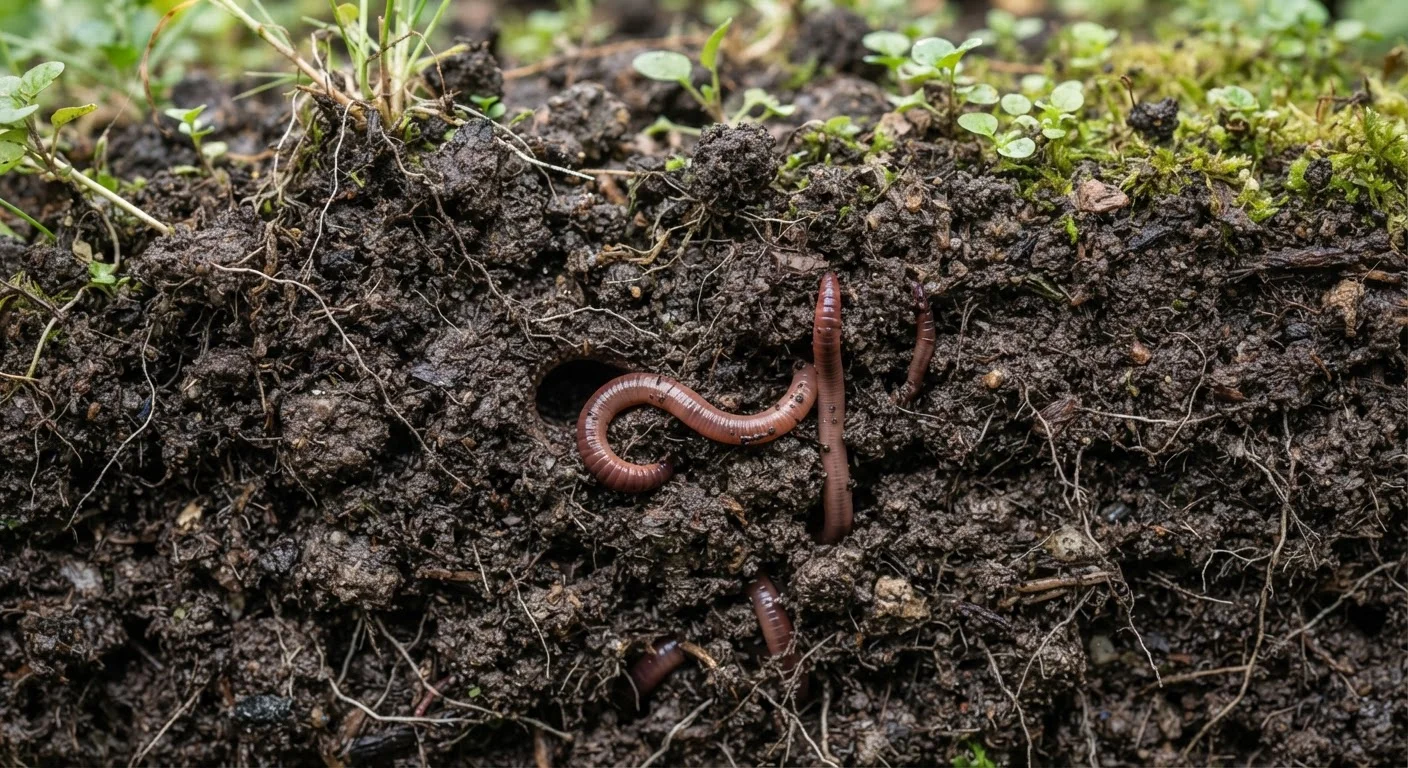
Biology is the living component. A single teaspoon of healthy soil can contain hundreds of millions of bacteria, along with fungi, nematodes, and larger organisms like earthworms. These creatures break down organic matter into plant-available nutrients, suppress disease-causing pathogens, and physically aerate the soil as they move through it. Feeding this community - rather than bypassing it with synthetic inputs - is the basis of long-term soil improvement.
Chemistry governs nutrient availability. Soil pH (its acidity or alkalinity on a 0-14 scale) controls whether nutrients like nitrogen, phosphorus, and iron are accessible to plant roots. Even nutrient-rich soil can starve plants if pH is off. Most home gardens benefit from a basic soil test, available through cooperative extension offices or garden centers, which reveals pH and primary nutrient levels.
~95%
Of food produced depends on healthy soil
According to the UN Food and Agriculture Organization, approximately 95% of the world's food is directly or indirectly produced on soil.
1 billion+
Bacteria in a single teaspoon of healthy soil
USDA soil scientists estimate that one teaspoon of productive soil contains between 100 million and 1 billion bacteria alone, not counting fungi and other organisms.
2-3 inches
Recommended annual compost application depth
Many cooperative extension services recommend applying 2-3 inches of compost per growing season as a baseline for maintaining or improving organic matter levels.
How to Read What Your Soil Is Telling You
Your soil is constantly communicating through your plants and its own physical properties. Learning to read these signals costs nothing and saves money on misguided fixes.
The squeeze test: Take a handful of moist soil and squeeze it into a ball. Sandy soil falls apart immediately; clay holds a slick, hard shape; healthy loamy soil forms a loose ball that crumbles when you poke it. This quick check tells you whether structure amendments - compost, gypsum for clay, or organic matter for sand - are worth prioritizing.
Plant symptoms: Yellowing leaves between green veins often signal an iron or magnesium deficiency tied to high pH. Stunted, dark-purple growth can indicate phosphorus lockout, again frequently a pH problem. Consistent poor performance across many plant types usually points to compaction, drainage issues, or nutrient depletion rather than individual plant care errors.
Earthworm count: Dig a 12-inch cube of soil and count the earthworms. Fewer than five in healthy-looking soil suggests low organic matter or compaction. Earthworms are a reliable proxy for overall biological activity.
Get a Soil Test Before You Spend Anything
Many state cooperative extension offices offer basic soil testing for under $20, and some counties offer it free. The results tell you exactly which nutrients are lacking and what your pH is - preventing you from buying amendments your soil doesn't need. It's the most cost-effective diagnostic tool available to home gardeners.
Practical, Low-Cost Ways to Build Better Soil
Improving soil doesn't require expensive products. The most effective strategies are also the most affordable.
Add compost consistently. Compost improves structure in both sandy and clay soils, feeds soil biology, and slowly releases nutrients. Homemade compost from kitchen scraps and yard waste is essentially free. Even purchased compost, applied at 2-3 inches per season, costs less than repeated fertilizer applications and produces more durable results.
Keep the soil covered. Bare soil loses moisture quickly, erodes, and heats to temperatures that harm microbial life. A layer of organic mulch - shredded leaves, straw, wood chips - protects the surface, moderates temperature, and slowly feeds the soil as it breaks down. See our guide to mulching garden beds for application details.
Minimize disturbance. Every time you deeply till, you break apart fungal networks that help plants access water and nutrients. Where possible, use a broadfork or hand tools to loosen compaction without fully inverting the soil. Add amendments to the surface and let biology work them in.
Rotate what you grow. Different plants take different nutrients from soil and leave behind different root structures. Rotating plant families each season prevents nutrient depletion in specific spots and reduces disease buildup. This connects directly to strategies covered in our companion planting overview.
If you're planning a new garden space, understanding soil health is the logical first step before deciding on layout. Our guide to raised beds vs. in-ground planting explains how your existing soil quality should factor into that decision.