

Key Takeaways
- Plants need water based on soil moisture, not a fixed daily schedule.
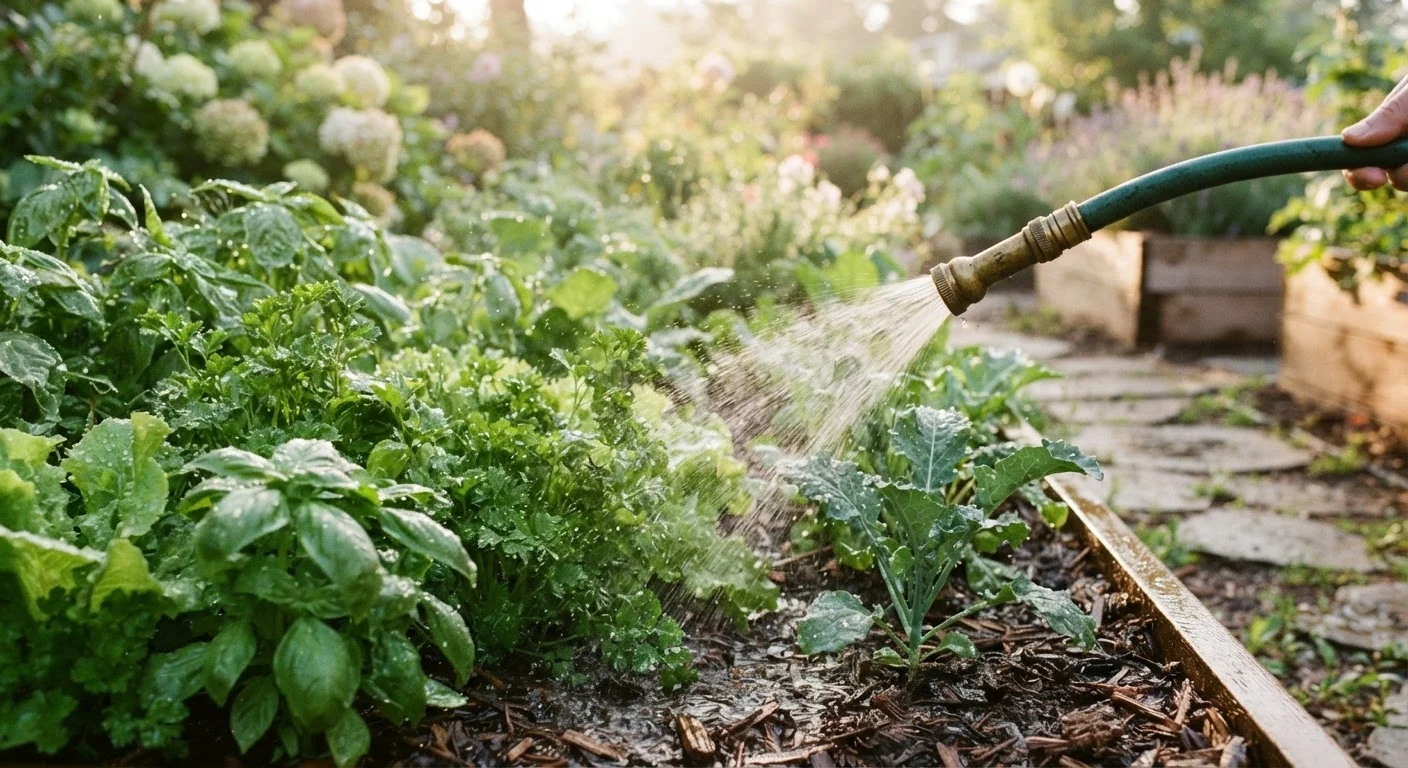
- Wetting leaves in sunlight does not cause burn or scorch - this is a persistent myth.
- Overwatering is one of the most common causes of root rot and plant death.
- Deep, infrequent watering encourages stronger, drought-resilient root systems.
- Wilting doesn't always mean thirst - it can signal overwatering or heat stress.
Why Watering Habits Matter More Than You Think
Water is the single resource most gardeners adjust most frequently - and the one they most often get wrong. Overwatering kills more houseplants and garden beds than drought does, yet the advice circulating online and passed between neighbors often reinforces the very habits causing the damage.
The good news: correcting your watering approach costs nothing. Understanding what plants actually need - rather than following conventional wisdom - can mean healthier growth, lower water bills, and far less frustration. If you're also working toward a more water-efficient yard overall, our guide to drought-tolerant gardening covers plant selection and soil strategies that complement smarter watering habits.
Myth
Plants need to be watered every day to stay healthy.
Fact
Most plants do better with deep, infrequent watering than with daily shallow doses.
Daily watering keeps moisture near the soil surface, which encourages shallow root development. Roots follow water - so when water is always just an inch or two down, roots stay near the top and become more vulnerable to heat and drought. Watering deeply every few days (depending on your soil type, climate, and plant species) pushes moisture further into the soil, prompting roots to grow deeper and become more self-sufficient. Always check soil moisture before watering rather than following a fixed schedule.
Myth
Watering plants in direct sunlight causes leaf scorch from water droplets acting as magnifying lenses.
Fact
Scientific research does not support the idea that water droplets on leaves cause sunburn under normal outdoor conditions.
This is one of the most durable garden myths around. While a 2010 study published in New Phytologist suggested the possibility under certain controlled conditions with smooth, waxy leaves, subsequent analysis found the effect to be negligible for the vast majority of garden plants in real outdoor settings. Leaf damage after midday watering is almost always caused by other factors - heat stress, pre-existing disease, or mineral deposits from hard water. If you prefer to water in the morning, that's still a good habit (it reduces fungal risk by letting foliage dry during the day), but fear of leaf scorch shouldn't drive the decision.
Myth
If a plant is wilting, it needs water immediately.
Fact
Wilting can be caused by overwatering, heat stress, or root damage - not just drought.
Wilting is a plant's response to water stress, but that stress can come from too much water as easily as too little. When roots sit in waterlogged soil, they lose the ability to absorb oxygen and begin to rot - a condition that produces wilting that looks identical to drought wilt. Before watering a wilting plant, check the soil. If it's wet or soggy, hold off and investigate for drainage issues. Wilting during the hottest part of a summer afternoon is also frequently a temporary heat response; many plants perk back up on their own once temperatures drop toward evening.
Myth
More water is always better - plants can't really get too much.
Fact
Overwatering is one of the leading causes of plant death, leading to root rot and oxygen deprivation in the root zone.
Plant roots need both water and air to function. Soil that stays saturated for extended periods squeezes out the air pockets roots depend on, creating anaerobic conditions where harmful pathogens thrive. Root rot - caused by water molds such as Phytophthora and Pythium - is difficult to reverse once established. Signs of overwatering include yellowing lower leaves, a musty smell from the soil, soft or blackened stems near the base, and paradoxically, wilting despite wet soil. Well-draining soil and pots with drainage holes are your first line of defense.
Myth
Tap water is fine for all plants and doesn't need any special treatment.
Fact
Tap water quality varies widely by region and can affect sensitive plants, particularly those sensitive to chlorine or fluoride.
Most garden plants tolerate typical municipal tap water without issue. However, some houseplants - particularly spider plants, peace lilies, and certain palms - can show tip browning from fluoride accumulation over time. Chlorine, added to most municipal supplies, dissipates when water sits uncovered for a few hours, which is a simple fix for sensitive plants. If your tap water is notably hard (high mineral content), residue buildup on soil can affect pH over time. In most cases, this isn't a critical concern for outdoor gardens, but it's worth factoring in for container plants grown long-term.
What These Corrections Mean for Your Garden Routine
Once you drop the daily watering ritual and start checking soil moisture before reaching for the hose, most people find they water significantly less - and their plants respond better. A simple finger test (push a finger 2 inches into the soil; if it's still moist, hold off) takes seconds and is far more reliable than any schedule.
~50%
Household outdoor water lost to inefficient use
The U.S. Environmental Protection Agency estimates that roughly half of outdoor residential water use is wasted due to overwatering, evaporation, and runoff.
2-3×
More water needed by shallow-rooted plants vs. deep-rooted ones
Plants conditioned by frequent shallow watering require significantly more irrigation than those trained with deep, infrequent sessions, according to cooperative extension research.
Pairing corrected watering habits with good mulch coverage makes a measurable difference. A 2-3 inch layer of organic mulch over garden beds slows evaporation, which means fewer watering sessions and more consistent moisture at root level. Our mulching guide explains how to apply it correctly without creating conditions for rot or pest harborage.
If you've recently moved seedlings and noticed them struggling despite regular watering, the problem is often rooted in transplant stress rather than moisture levels - worth reading about in our piece on why seedlings fail after transplanting.
Don't Ignore Drainage When Diagnosing Plant Problems
Poor drainage is a hidden multiplier for nearly every overwatering problem. If your garden beds don't drain well after heavy rain, or your containers sit in standing water, no amount of adjusted watering frequency will fully protect plant roots. Improving soil structure with compost or ensuring pots have adequate drainage holes should come before fine-tuning your watering schedule.