

Key Takeaways
- Disorganization costs real money through duplicate purchases and late fees, not just lost time.
- The average household spends significant time each week searching for misplaced items.
- Clutter has been linked in research to elevated stress levels and reduced focus.
- Low-cost organizational systems, not major renovations, solve most disorganization problems.
- Addressing clutter proactively prevents larger expenses from accumulating over time.
Hidden Costs of Disorganization
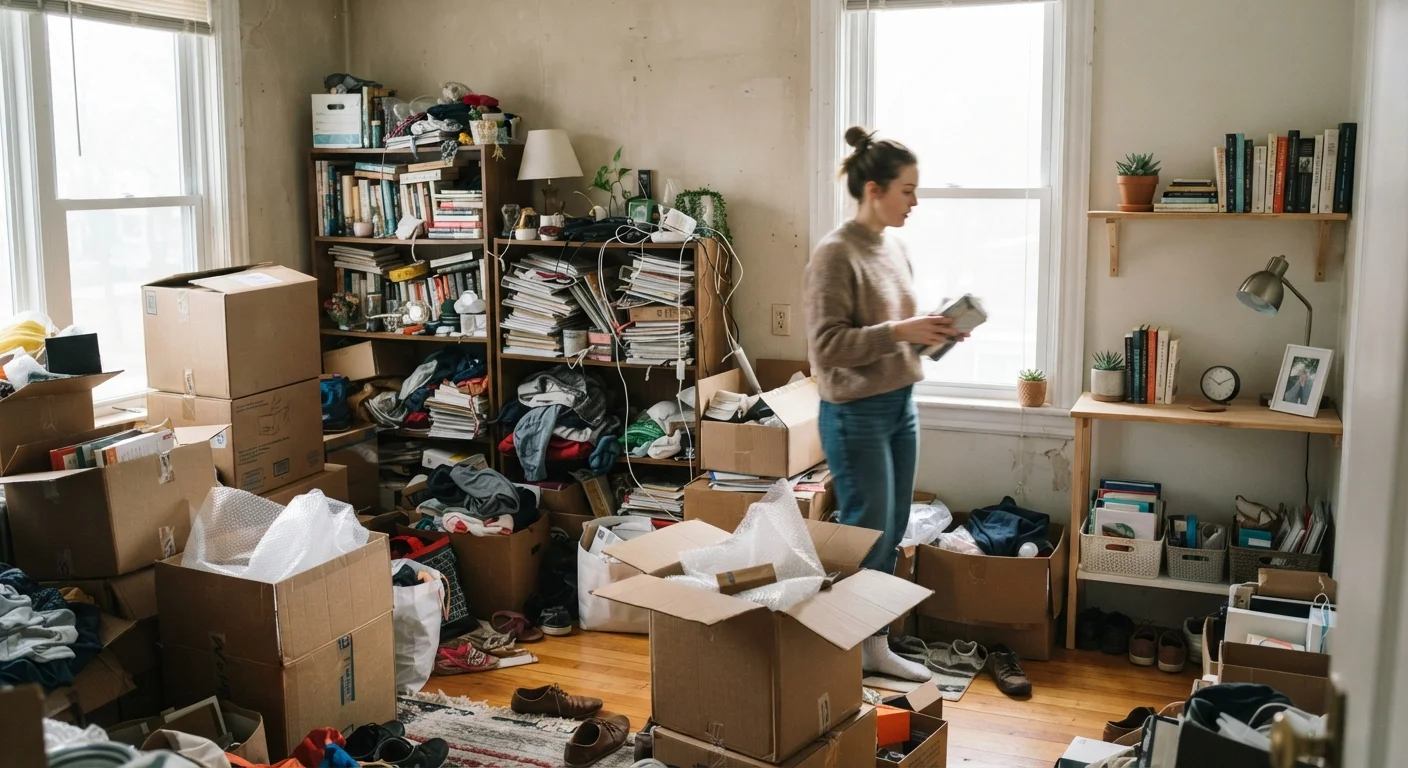
The hidden costs of a disorganized home are the indirect financial, time, and mental expenses that result from clutter and poor home systems - things like buying duplicate items you couldn't find, missing bill deadlines, or spending hours searching for misplaced belongings. These costs rarely show up on a receipt, but they add up significantly over months and years. Unlike a one-time purchase, disorganization creates a slow, steady drain on household resources.
Researchers studying household behavior sometimes refer to this as 'friction cost' - the cumulative time and money lost when environments aren't designed to support efficient routines.
The Real Price Tag on Clutter
Most people think of a disorganized home as an aesthetic problem - something untidy but ultimately harmless. The reality is more costly. Disorganization creates a category of expense that's easy to overlook because it never appears as a single line item. It hides in small, repeated losses that accumulate quietly over months.
These losses fall into three broad buckets: money spent unnecessarily, time lost to inefficiency, and mental energy drained by a chaotic environment. Understanding each one is the first step toward addressing them without a major overhaul of your home or budget.
For a broader look at how everyday purchases carry costs that aren't obvious upfront, see our piece on hidden costs buried in everyday purchases.
~1 hr/day
Time spent searching for misplaced items
Reported by the National Association of Professional Organizers as a common estimate for average American households.
$2.7B/yr
Lost productivity from misplaced items at home and work
A figure cited in organizational productivity research, reflecting the combined personal and professional cost of disorganization in the US.
80%
Of clutter caused by disorganization, not lack of space
A commonly cited organizing industry finding suggesting that most clutter problems are systems problems, not storage capacity problems.
Duplicate Purchases and Late Fees
One of the most direct financial impacts of disorganization is buying things you already own. A misplaced pair of scissors, a lost bottle of medicine, a charger that's somewhere under a pile - these prompt replacement purchases that add up fast. Consumer behavior research consistently identifies this as a widespread household habit, not an occasional accident.
Misplaced paperwork is another financial drain. A bill buried under a stack of mail can mean a late fee. A warranty card never filed means a repair comes entirely out of pocket. These are costs that well-designed systems almost entirely eliminate - not through spending more, but through knowing where things are.
This is where disorganization intersects directly with household budgeting - tracking where money goes only works when you can also control where things physically go.
Time Is a Household Resource Too
The National Association of Professional Organizers has reported that the average American spends roughly an hour each day looking for misplaced items. Whether that precise figure applies to your household or not, the underlying pattern is real: searching for things is a significant and mostly invisible time expense.
That time isn't neutral. It creates friction at the worst moments - mornings before work, before appointments, before school runs. The cumulative stress of those small daily scrambles has been documented in environmental psychology research as a genuine contributor to elevated cortisol levels at home.
Start With One High-Friction Zone
Instead of tackling your whole home at once, identify the single spot that causes the most daily stress - a chaotic entryway, an overloaded countertop, a tangled junk drawer. Set up a simple, logical system for just that area first. Success in one zone builds both confidence and habit, making the next area easier to address.
Addressing this doesn't require a weekend-long overhaul. Starting with one frequently chaotic zone - a junk drawer, an entryway table, a bathroom cabinet - and giving it a simple, consistent system can free up meaningful time within a week.
Low-Cost Systems That Actually Work
Effective home organization doesn't require expensive storage solutions. The most durable systems are built on three principles: designated locations for frequently used items, visible storage so nothing gets forgotten, and friction reduction so putting things away is easier than leaving them out.
Repurposed containers - shoe boxes, glass jars, trays from other uses - work just as well as retail organizers for most household categories. The organizing logic matters more than the container itself.
If you're starting from a cluttered baseline, it's also worth questioning some common assumptions about what organization requires. Our article on minimalism myths that complicate organization is a useful reality check before you begin.
For households where multiple people share spaces, systems need to account for different habits and routines. See our guide on organizing shared living spaces for practical approaches that work across different tidiness styles.
Organization Is a System, Not a State
A tidy home isn't the goal - a functional system is. Homes naturally accumulate disorder over time, so the aim is to create systems that make re-ordering fast and intuitive, not to achieve a permanently perfect environment. Low-maintenance systems that take seconds to reset are more sustainable than elaborate arrangements that require significant effort to maintain.